













Digital Product Passport, PPWR & Digital Labels: A Simple Guide
If you sell products in the European Union, you may have already heard terms such as Digital Product
Passport (DPP), PPWR, ESPR and digital labels. At first, they can sound complicated. But the basic idea is simple: the EU wants products and packaging to become more transparent, easier to recycle and easier to manage throughout their life cycle. Some of this information will be available digitally, often through a QR code or another type of digital data carrier.
However, there is an important point to understand:
A Digital Product Passport and a digital packaging label are not the same thing.
They come from different EU rules and can contain different information. This guide explains the difference in simple terms.
What Is a Digital Product Passport?
A Digital Product Passport, or DPP, is a digital record containing information about a product. You can think of it as a digital ID card for a product.
Instead of printing large amounts of information directly on a product or its packaging, a company can connect the physical product to digital information using a data carrier.
Depending on the rules for the specific product category, this could be placed on:
- the product itself,
- its packaging, or
- documentation supplied with the product.
Under the EU’s Ecodesign for Sustainable Products Regulation (ESPR), a Digital Product Passport must be linked to a unique product identifier. The exact information required will be defined for individual product groups through additional EU rules.
What information can a Digital Product Passport contain?
The exact information will depend on the type of product. A DPP may include information such as:
- product identification,
- manufacturer or responsible company,
- materials and components,
- substances of concern,
- sustainability information,
- recycled content,
- durability,
- repair and maintenance information,
- instructions for recycling or disposal,
- technical documentation,
- compliance information.
Not every customer will necessarily see every piece of information. Some data may be intended for consumers, while other data may only be available to authorities or specific businesses in the supply chain.
A simple DPP example
Imagine you buy a jacket.
There is a QR code on the label. You scan it with your phone and open the jacket’s Digital Product Passport. You may be able to see:
Material: 70% recycled polyester, 30% cotton
Manufacturer: Example Clothing Ltd. Production information: Made in Factory X Care instructions: Wash at 30°C
Repair information: Replacement zipper available
End of life: Instructions for textile collection and recycling

This information can stay connected to the product throughout its life.
What Is ESPR?
The Ecodesign for Sustainable Products Regulation (ESPR) is the EU regulation that creates the main framework for Digital Product Passports.
Regulation (EU) 2024/1781 entered into force on 18 July 2024. It allows the European Commission to create sustainability and information requirements for different groups of products.
The important thing for businesses is that there is not one single DPP deadline for every product sold in Europe.
Requirements are being introduced product group by product group.
The EU’s 2025–2030 working plan gives priority to areas including:
- textiles, especially apparel,
- furniture,
- mattresses,
- tyres,
- iron and steel,
- aluminium,
- selected energy-related products.

The Commission is preparing individual requirements for these product groups over time.
So, if your company sells products in Europe, the question is not simply:
“When does the DPP start?”
The better question is:
“When will a Digital Product Passport become mandatory for my product category?”
What Is PPWR?
PPWR stands for the Packaging and Packaging Waste Regulation.
Its official name is Regulation (EU) 2025/40.
While the ESPR mainly focuses on products, the PPWR focuses on packaging. The PPWR entered into force on 11 February 2025, and most of its provisions started to apply from 12 August 2026. The regulation covers packaging placed on the EU market, regardless of the material used.
Its goals include:
- reducing packaging waste,
- making packaging easier to recycle,
- reducing unnecessary packaging,
- increasing reuse,
- increasing recycled content,
- improving packaging information and labelling.
In simple terms, the EU wants businesses to use less packaging, better packaging and clearer packaging information.
What Are Digital Labels?
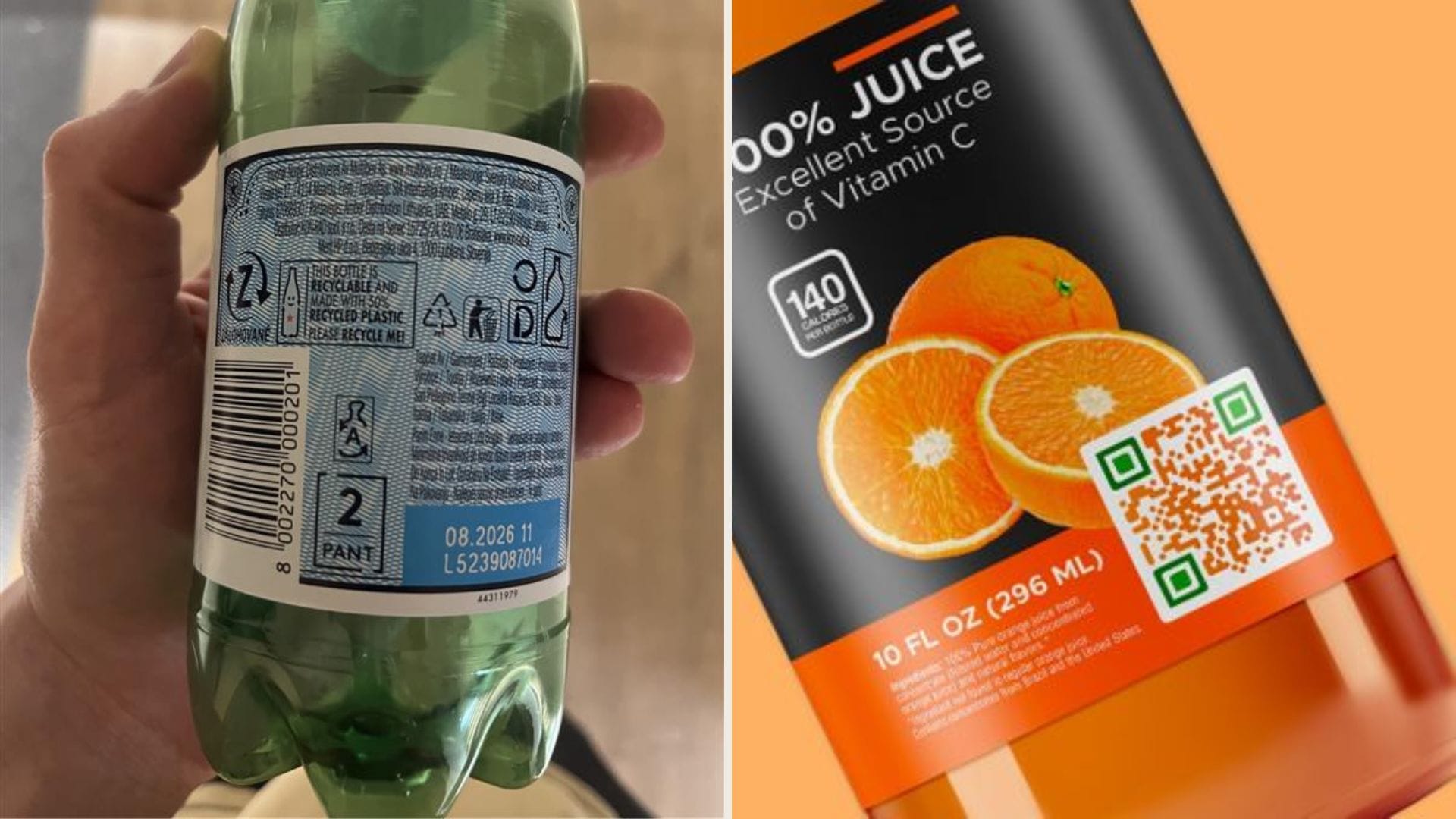
A digital label is simply information about a product or packaging that is accessed digitally instead of being fully printed on the physical label.
For example, a QR code on a package could take the customer to information explaining:
- what the packaging is made from,
- how to separate its different parts,
- where it should be disposed of,
- whether the packaging is reusable,
- how a reuse or return system works.
The term “digital label” is often used very broadly, which is one reason the topic can become confusing.
A QR code does not automatically mean that something has a Digital Product Passport.
A QR code is only the tool used to access information.
What sits behind that QR code depends on the regulation and purpose.
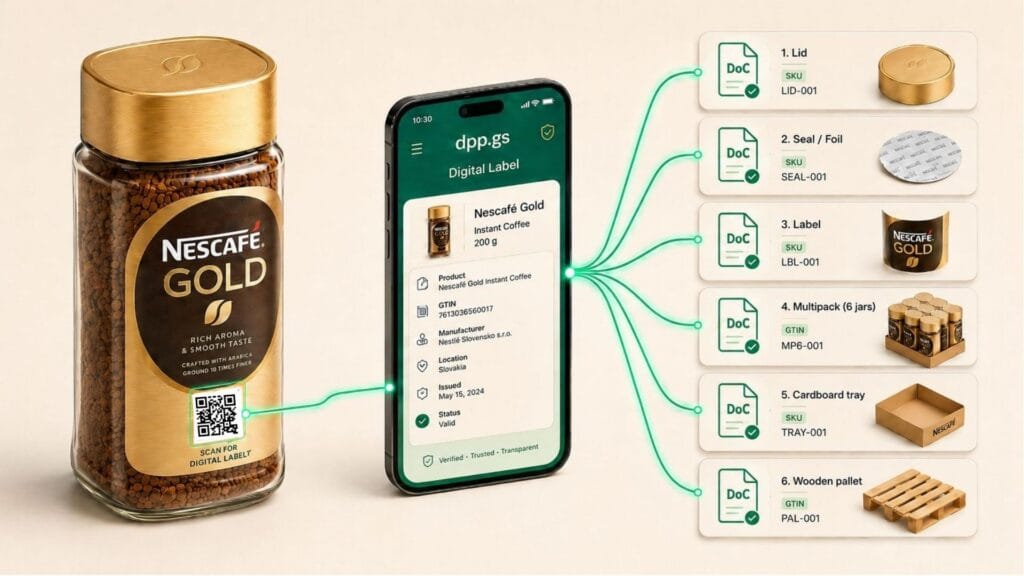
Digital Product Passport vs. PPWR Digital Labels
The easiest way to understand the difference is to separate the product from its packaging.
| Digital Product Passport | PPWR Labels & Digital Information | |
|---|---|---|
| Main focus | The product | The packaging |
| Main regulation | ESPR | PPWR |
| Purpose | Product sustainability, traceability and lifecycle information | Packaging composition, sorting, reuse and other packaging information |
| Digital access | Through a data carrier specified by the applicable rules | QR code or another standardised digital data carrier where required or allowed |
| Same deadline for everything? | No | No |
| Can they work together? | Yes | Yes |
This distinction is very important.
PPWR does not simply create a Digital Product Passport for every package.
Instead, it creates its own packaging information and labelling requirements.
At the same time, the regulations are designed so companies should not have to fill packaging with many different QR codes.
Can One QR Code Be Used for Both?
Potentially, yes.
This is one of the most useful parts of the new system.
The PPWR says that when another EU law requires information about the packaged product to be provided through a data carrier, one data carrier should be used for the information about both the product and the packaging. The two sets of information must remain easy to distinguish.
For example, imagine a pair of shoes sold in a cardboard box.
The shoes may eventually require a Digital Product Passport under the ESPR.
The cardboard box may have PPWR packaging information.
Instead of placing several QR codes next to each other, the same digital entry point could provide access to:
Product information
Information about the shoes, materials, manufacturer, repairability and sustainability.
Packaging information
Information about the cardboard box and how it should be sorted or recycled.
For customers, this should create a much simpler experience.
Does PPWR Make QR Codes Mandatory?
No.
This is another common misunderstanding.
For standard packaging sorting information, PPWR introduces a harmonised physical label showing material composition.
Businesses may also add a QR code or another standardised digital data carrier with more detailed sorting information.
For reusable packaging, however, additional information about reuse systems and collection points must be provided through a QR code or another standardised, open digital data carrier once the relevant requirements apply.
There are also specific digital-marking requirements for packaging containing substances of concern.
So the correct answer is:
Some PPWR information can be digital, some digital information is mandatory in specific cases, and some uses of QR codes are optional.
Important PPWR Labelling Dates
Businesses should also understand that the PPWR’s general application date and its labelling deadlines are different.
12 August 2026
Most PPWR provisions generally started applying from this date.
Harmonised packaging labels
Packaging will need a harmonised label showing its material composition from 12 August 2028 or 24 months after the relevant implementing rules enter into force, whichever is later.
The label is intended to make sorting packaging easier for consumers.
Reusable packaging
Reusable packaging will need specific reuse labelling from 12 February 2029 or 30 months after the relevant implementing rules enter into force, whichever is later.
Additional information about reuse systems and collection points will be accessible digitally.
This means businesses should not assume that every PPWR labelling requirement became mandatory on 12 August 2026.
Different requirements have different implementation dates.
Why Is the EU Moving Toward Digital Product Information?
Physical labels have limited space.
A small box may need to display:
- legal information,
- safety information,
- recycling instructions,
- manufacturer information,
- product information,
- sustainability claims,
- certification marks.
Adding more information makes packaging difficult to read.
Digital information solves part of this problem.
One QR code can connect customers, recyclers, repair companies, distributors and authorities to much more information than a printed label can hold.
It also makes information easier to update and use throughout the supply chain.
Who Should Prepare for DPP and PPWR?
The rules can affect many businesses, including:
- manufacturers,
- brands,
- importers,
- distributors,
- retailers,
- e-commerce businesses,
- packaging manufacturers,
- packaging suppliers,
- companies selling products into the EU.
Importantly, the rules are not limited to companies physically located in the European Union.
If products or packaging are placed on the EU market, EU requirements may still apply. The ESPR framework, for example, covers products placed on the EU market whether they were manufactured inside or outside the EU.
How Can Companies Prepare?
You do not need to build every future Digital Product Passport today.
But it makes sense to start organising the information that future regulations may require.
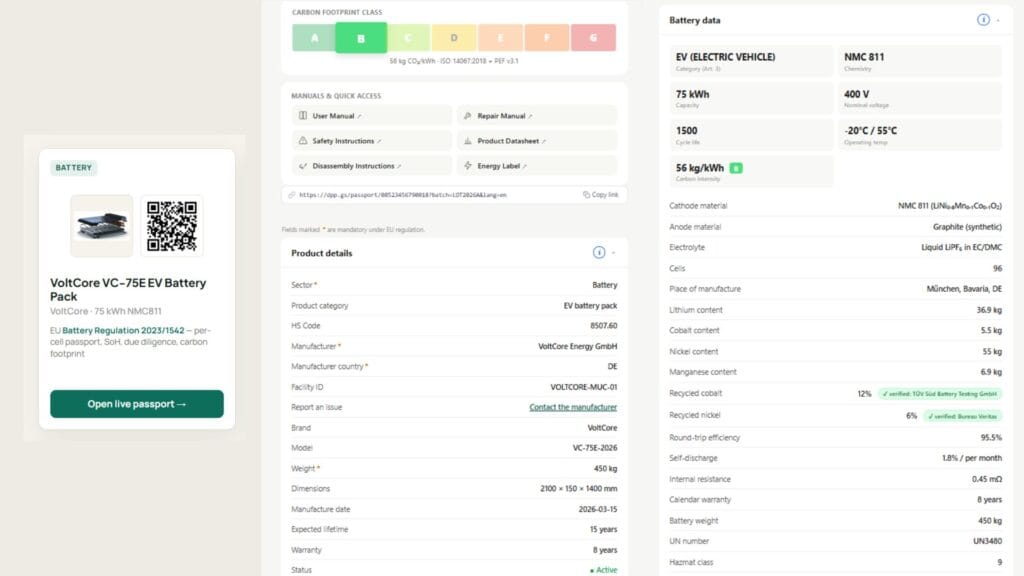
1. Identify your product categories
Check which EU rules apply to your products and packaging.
A clothing company, furniture company and food producer may face very different requirements.
2. Map your packaging
Create a clear list of your packaging formats. Record information such as:
- packaging material,
- packaging weight,
- individual components,
- recycled content,
- supplier,
- recyclability,
- reuse information where relevant.
3. Improve product data
Find out where your product information currently lives. It may be spread across:
- spreadsheets,
- ERP systems,
- supplier documents,
- product databases,
- PDFs,
- emails.
Future digital compliance becomes much easier when this information is structured and connected.
4. Speak with suppliers
Many companies do not produce all product components or packaging themselves.
You may therefore need information from suppliers about materials, substances, recycled content or manufacturing processes.
Start identifying these data gaps early.
5. Plan for digital identifiers
Think about how physical products and packaging could connect to digital information.
The ESPR requires DPPs to use persistent unique product identifiers and interoperable digital systems rather than information locked inside one proprietary platform.
6. Follow product-specific EU rules
Do not rely only on general DPP articles.
The most important details (including exactly what data is needed and whether the passport is created at model, batch or individual-item level) will depend on the rules adopted for each product group.
Common Misunderstandings About DPP and PPWR
“Every product needs a Digital Product Passport now.”
No.
The ESPR creates the framework, but DPP requirements are introduced for specific product groups through additional rules.
“PPWR and DPP are the same regulation.”
No.
The ESPR deals with products data and their material lifecycle and creates the DPP framework. The PPWR deals with packaging and packaging waste.
“Every package needs a QR code.”
Not necessarily.
PPWR allows or requires digital information in different situations. The exact requirement depends on the packaging type and information involved.
“A QR code is a Digital Product Passport.”
No.
A QR code is a data carrier.
It can link to a DPP, packaging information, instructions, a website or many other types of digital content.
“We can wait until the final deadline before collecting data.”
Technically, some obligations may still be years away. Operationally, waiting can create problems.
Collecting reliable product and packaging information across hundreds or thousands of SKUs can take significant preparation.
The Bigger Picture
The Digital Product Passport and PPWR are part of a broader shift in the European market.
Products will increasingly need to be accompanied by structured, reliable and accessible information.
For businesses, that means product data will become almost as important as the physical product itself.
A manufacturer may no longer only need to answer:
“What do we sell?”
It may also need to answer:
“What is it made from, where did the information come from, how can it be repaired, and what happens to it at the end of its life?”
The companies that organise this information early will generally find future compliance much easier.
FAQ: Digital Product Passport, PPWR and Digital Labels
A Digital Product Passport is a digital record containing information about a product. Under the EU ESPR framework, it can provide information about product identity, sustainability, materials, compliance, repair and end-of-life management.
PPWR stands for Packaging and Packaging Waste Regulation. It is the EU regulation that introduces new requirements for packaging design, waste prevention, recyclability, reuse and labelling.
Yes. Regulation (EU) 2025/40 entered into force on 11 February 2025, and most provisions generally started applying on 12 August 2026. Some requirements have later deadlines.
No. DPP requirements are being introduced gradually for different product groups through product-specific EU rules.
No. A QR code is simply one way of connecting a physical product or package with digital information. A Digital Product Passport is the structured information system behind the data carrier when DPP rules apply.
Yes. Where EU law requires digital information for both the packaged product and its packaging, PPWR provides for a single data carrier, while keeping the two sets of information distinguishable.
The harmonised material-composition label is scheduled to apply from 12 August 2028 or 24 months after the relevant implementing rules enter into force, whichever is later. Specific rules for reusable packaging follow from 12 February 2029 or 30 months after the relevant implementing act, whichever is later.
Final Thoughts
The easiest way to remember these new EU requirements is:
DPP = information about the product.
PPWR = rules for the packaging.
Digital label = a way to access information digitally.
The systems can work together, and in some situations the same QR code or data carrier may provide access to both product and packaging information.
For businesses, the best first step is not necessarily to start printing QR codes.
It is to start building accurate, structured and reliable product and packaging data.
Once the data is ready, adapting it to future Digital Product Passport and PPWR requirements becomes much easier.
Latest waste library articles

-

How large cities manage their trash pickup so efficiently
Waste Collection -
How can the Deposit Refund System look like?
-

DRS explained 101: what is it and how does it work?
Deposit Return System -
Automated waste management helps factories reach ESG goals
Factory Waste Management
Smart Waste Newsletter
Get monthly updates from our company and the world of waste!