















Digital Product Passport Platform – dpp.gs
Automate Digital Product Passport and digital labelling compliance with dpp.gs by Sensoneo. Built for EU ESPR, PPWR, and Battery Regulation using open GS1 standards.
PPWR
Digital Labelling
Multi-layer packaging QR codes
Full
EU compliance
Built for ESPR, PPWR, and Battery Regulation
Multi-standard identification
GS1 Digital Link, EPC, UUID, DID, and MA-DPP
How the dpp.gs Digital Product Passport platform works
dpp.gs is Sensoneo’s self-service Digital Product Passport (DPP) platform. It helps manufacturers and importers meet Digital Product Passport requirements under the Ecodesign for Sustainable Products Regulation (ESPR) and packaging obligations under the Packaging and Packaging Waste Regulation (PPWR) for products placed on the EU market. dpp.gs is built on deep compliance-IT expertise from DRS IT systems for single-use and reuse packaging return, and EPR systems – both operated by Sensoneo.
Sensoneo operates the IT behind national deposit-return schemes in 9 countries, processing more than 50 million transactions a day. Its EPR systems already handle producer-level compliance reporting – material composition, packaging data, recycling obligations.
dpp.gs by Sensoneo is an enterprise compliance software engineered to meet EU Ecodesign for Sustainable Products Regulation (ESPR EU 2024/1781), PPWR packaging rules, and EU Battery Passport requirements using GS1 Digital Link standards.
dpp.gs applies that same expertise to close the gap manufacturers face with EU legislation such as ESPR and PPWR, bringing the same engineering team and regulatory posture to digital product passports.

Key benefits of dpp.gs
“Regulatory complexity is only going to increase, and for many companies, the real risk isn’t non-compliance itself, but simply not knowing what’s coming and when. dpp.gs was built to change that. We wanted to give sustainability and operations teams a practical tool that handles today’s requirements – whether that’s a Digital Label on your packaging, a Battery Passport, or Sunrise 2027 customs obligations – while already laying the groundwork for the full Digital Product Passport rollout.“
Martin Basila, CEO of Sensoneo
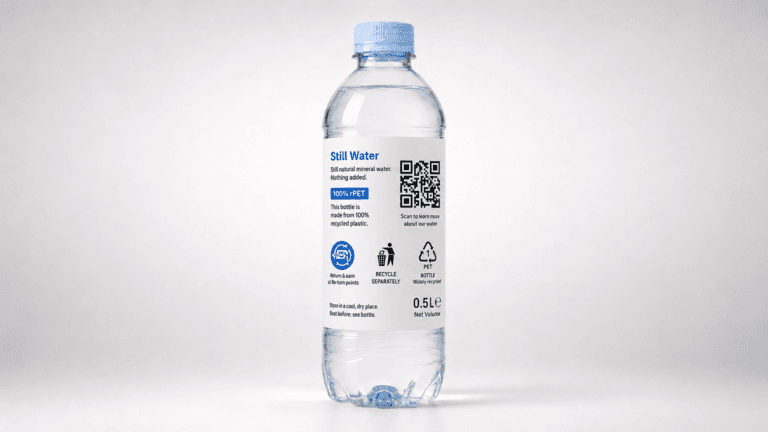
Digital Product Passport with international identification code standards
Every QR resolves to the same digital product passport – GS1 Digital Link, EPC, UUID, DID or MA-DPP. dpp.gs is identifier-agnostic by design: one passport, any open standard
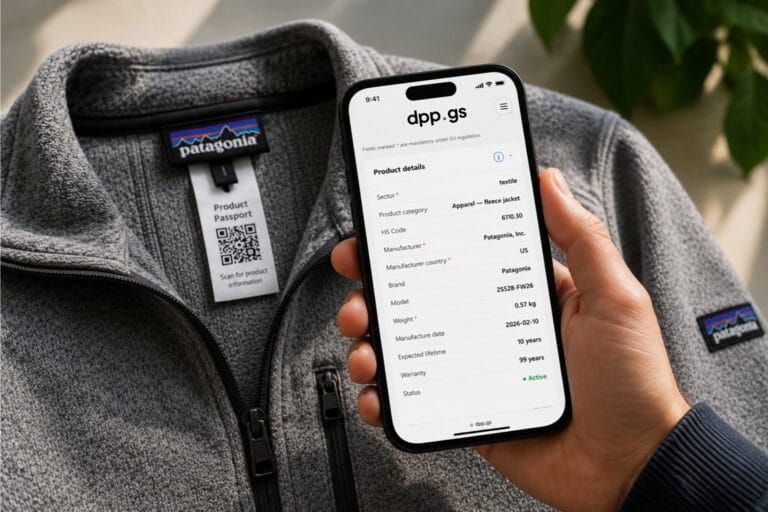
Digital Product Passports
for 15 product sectors
From batteries and textiles to packaging and electronics, dpp.gs already covers every major ESPR, Battery Regulation and PPWR product group. Every category has a live, working demo
What is PPWR digital labelling?
Digital labelling is the practice of moving mandatory product and packaging information – including full supply-chain traceability – onto a QR code, instead of printing it all on the package.
Since PPWR took effect on 12 August 2026, packaging must carry material composition, recycling instructions, a Declaration of Conformity (DoC), EPR details, and a batch or serial number for traceability – more than any label can hold.
Pictograms stay printed; the rest moves behind the code, kept updated by dpp.gs. One scan gives partners, retailers and authorities the complete, traceable record in 30 languages.
DPP Webinar: ESPR, PPWR & dpp.gs in practice
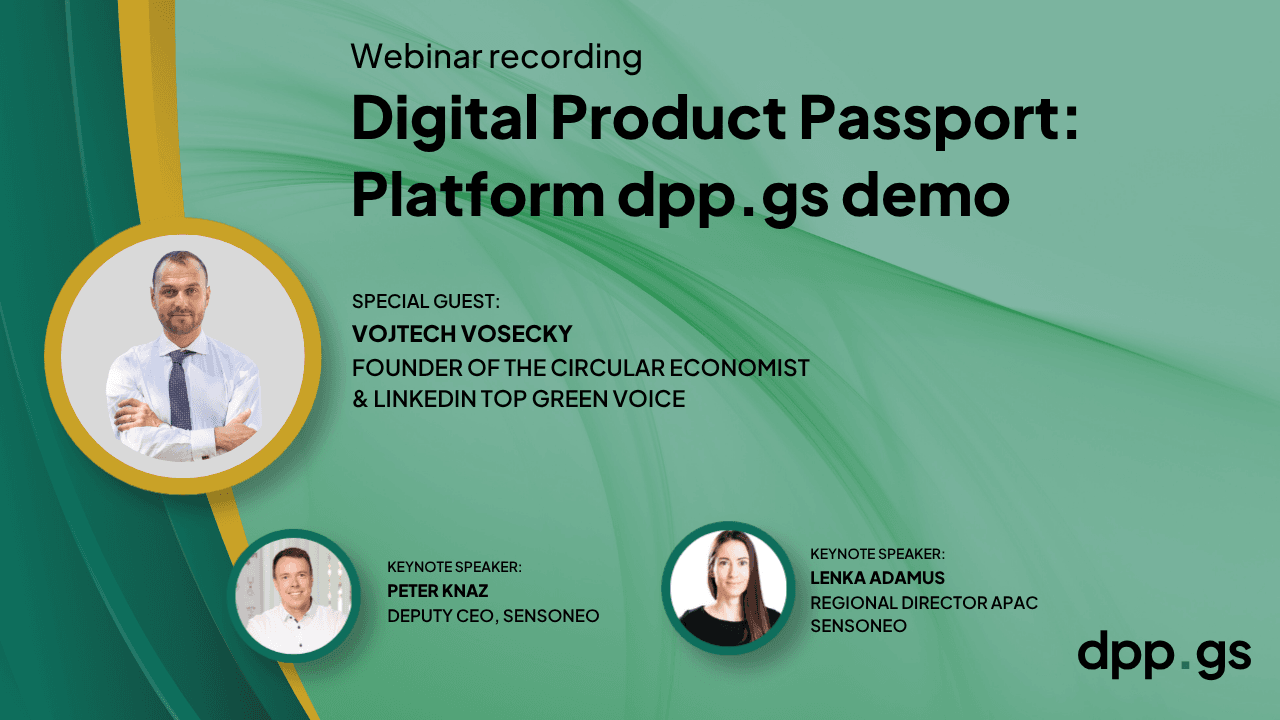
Watch our Digital Product Passport webinar recording, co-hosted by Vojtech Vosecky, one of the most recognized voices in the circular economy. He’ll be joined by Sensoneo’s technology experts, Peter Knaz and Lenka Adamus.
You’ll get from this webinar: what DPP means and how it differs from labeling, how PPWR and ESPR connect, dpp.gs in practice – data carriers, product types, and how it supports compliance and brand building – and how data access differs across producers, authorities, and consumers.
Digital Product Passport FAQ
A digital product passport is a structured digital record of a product — accessed by scanning a QR code or similar identifier – that carries data on materials, carbon footprint, repairability and compliance through its full lifecycle.
A battery passport is the digital product passport required under the EU Battery Regulation (2023/1542) – a QR-linked record of a battery’s materials, carbon footprint and recycling data.
From 18 February 2027, for EV and LMT batteries (no minimum size) and industrial batteries above 2 kWh.
Because it’s an open standard: your QR codes keep resolving and your data exports to CSV even if you switch platforms – no blockchain wallet, no vendor lock-in.
ESPR (2024/1781) is the general ecodesign framework covering most product categories. PPWR (2025/40) is a separate regulation specifically for packaging, with its own labelling and conformity rules.
Since PPWR took effect on 12 August 2026, packaging must carry material composition, recycling instructions and a Declaration of Conformity – more than most labels can print, so that data moves behind a QR code.
Yes – the same QR code resolves under GS1 Digital Link for the EU and under GS1 US Sunrise 2027 for US retailers, so one passport covers both.
ESPR requires passports to stay accessible for a product’s expected lifetime. dpp.gs guarantees a minimum 10-year retention window, and your data exports to CSV at any time.
Yes – dpp.gs offers a REST API and publicly documented, MIT-licensed schemas for direct integration.
dpp.gs is free for up to 2 GTINs, with no credit card required to get started. Beyond that, pricing is custom – get in touch for a plan that fits your product catalogue. Contact the Sales Team – contact@dpp.gs