
















8 Digital Product Passport Myths That Could Derail Your EU Compliance Strategy
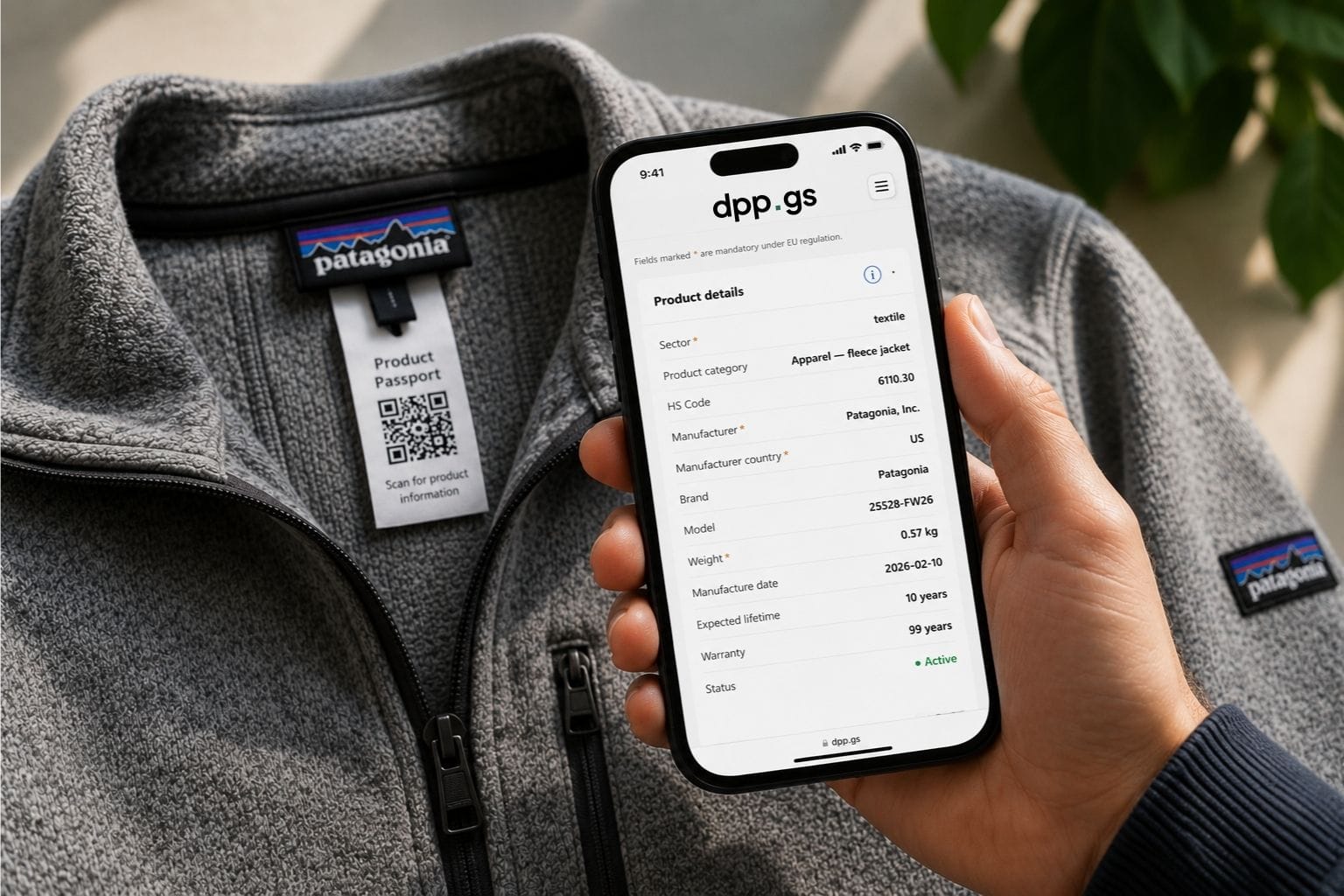
Digital Product Passports are moving from policy concept to operational reality across the European Union. But companies do not need to wait for every sector-specific requirement — or for perfect product data — to start using them.
A Digital Product Passport can already be created for a product using the reliable information available today. As new data becomes available, supplier inputs improve, or regulatory requirements are finalized, the passport can be updated and expanded. In other words, DPP implementation can be an iterative process rather than a one-time compliance project.
Even for companies whose products are not yet subject to mandatory DPP requirements, starting early provides a practical opportunity to test product identification, data flows, ownership, access rights, customer-facing information, and lifecycle updates before these capabilities become regulatory necessities.
The goal is not to claim compliance with requirements that do not yet apply. It is to start building and using the digital product infrastructure today instead of waiting for perfect regulatory certainty or a perfect dataset.
The real risk is not starting with incomplete data. It is waiting until every detail is known and discovering too late that the organization has never actually operated a Digital Product Passport.
Here are eight Digital Product Passport myths that could derail that strategy.
What Is a Digital Product Passport?
A Digital Product Passport (DPP) is a structured digital record linked to a product that provides information required under applicable EU legislation. Depending on the product category, that information may cover areas such as product identity, materials, sustainability, compliance, repair, recycling, performance, safety, and lifecycle characteristics.
The passport is intended to make reliable product information accessible to the people and organizations that need it, including consumers, businesses, repairers, recyclers, regulators, and other authorized parties.
Importantly, a Digital Product Passport is not necessarily one giant public database containing every piece of information about a product.
The broader DPP architecture is designed around interoperable digital information, product identifiers, data carriers, defined access rights, and an EU-level registry that indexes Digital Product Passports.
That distinction matters because many of the most common DPP compliance mistakes begin with misunderstanding what the passport actually is.
Myth #1: “Digital Product Passports Don’t Apply to Us Because We’re Not an EU Company”
This is one of the most dangerous assumptions international manufacturers can make.
Digital Product Passport obligations are not limited to businesses headquartered or incorporated inside the European Union. The more important question is whether a product covered by relevant legislation is being placed on the EU market.
A manufacturer in the United States, Asia, the United Kingdom, or another non-EU jurisdiction may therefore be affected if its products enter the European market.
Who Should Be Assessing DPP Exposure?
Depending on the applicable legislation and commercial structure, DPP requirements can affect organizations such as:
- Manufacturers
- Importers
- Producers
- Distributors
- Authorized representatives
- Online sellers
- Supply-chain partners
- Companies placing covered products on the EU market
For multinational organizations, determining exposure becomes even more complex because responsibility may differ by product family, subsidiary, importer, sales channel, or economic operator.

Do Digital Product Passports Apply to Companies Outside the EU?
Yes, they can. If a non-EU company places a product covered by applicable DPP requirements on the EU market, the relevant obligations can still apply.
The better compliance question is not:
“Where is our company based?”
However, the question should be following:
“Which of our products enter the EU market, under which legislation, and through which responsible economic operator?”
Companies should therefore build a product-and-market regulatory map rather than relying on headquarters location as a proxy for compliance exposure.
Myth #2: “Every Product Needs a Digital Product Passport Right Now”
Not Mandatory Yet Does Not Mean Not Useful Yet
A product may not need a mandatory Digital Product Passport today, but that does not mean a company has to wait before creating one.
Businesses can already launch Digital Product Passports voluntarily for selected products and use them as a structured digital layer for product information. The first version does not need to contain every data point that may eventually be required by regulation.
Start with the reliable product information you already have. Additional fields, supplier data, lifecycle information, and future regulatory requirements can be added as they become available.
This approach gives companies something that regulatory monitoring alone cannot provide: practical experience with Digital Product Passports before they become mandatory.

When Do Digital Product Passports Become Mandatory?
There is no one-size-fits-all DPP deadline.
One of the first major mandatory milestones arrives on 18 February 2027, when battery passports become mandatory for certain categories, including electric vehicle batteries, light means of transport batteries, and industrial batteries with a capacity greater than 2 kWh.
Under the ESPR working program, other priority product categories are progressing on indicative regulatory timelines, including:
- Iron and steel
- Textiles and apparel
- Tyres
- Aluminium
- Furniture
- Mattresses
- Energy-related products
- ICT products and other electronics

Those planning dates should not be confused with identical mandatory DPP deadlines for every product in each category. Product-specific requirements depend on the relevant legislation and its final application date.
Why the “One Deadline” Mindset Creates Risk
A company with batteries, textiles, electronic equipment, and furniture in its portfolio may face different requirements at different times.
That means compliance teams need a regulatory roadmap by product category, not a single corporate DPP deadline on a spreadsheet.
Track:
- Applicable legislation
- Product scope
- Delegated acts
- Data requirements
- Transition periods
- Technical standards
- Responsible economic operators
- Expected application dates
Companies that understand the sequencing can prioritize investments intelligently instead of treating every product as either “required now” or “not relevant yet.”
Myth #3: “A Digital Product Passport Is Just a QR Code”
A QR code may be one of the most visible parts of a Digital Product Passport experience. But the QR code is not the passport.
It is better understood as a potential data carrier or access point that connects a physical product to its digital information.
Is a Digital Product Passport Just a QR Code?
No. A QR code or other permitted data carrier can provide access to the Digital Product Passport, but the underlying compliance infrastructure includes far more than the visual code attached to the product.

A functional DPP environment may need to manage:
- Unique product identifiers
- Structured product information
- Machine-readable data
- Data storage
- Data exchange
- Interoperability
- Access permissions
- Regulatory metadata
- Supplier information
- Updates
- Data persistence
- Registry interaction
- Verification processes
The EU DPP Registry, which became operational in July 2026, further illustrates the distinction. It serves as an EU-level indexing system containing identifiers and required registration information rather than functioning as a simple QR-code database holding every detail of every product.
Why a QR-Code-First Strategy Can Backfire
Suppose a company purchases technology capable of creating millions of QR codes. That solves the easy part.
The harder questions remain:
Where does the underlying data come from? Who validates it?
Which version is authoritative?
Can suppliers provide missing information? Is the information machine-readable?
Can different systems exchange it? Who can see which fields?
How are updates managed?
How long must the information remain available?
If those questions have no answers, generating the QR code does not create DPP readiness. A stronger implementation sequence is:
Create → Populate → Validate → Connect → Enrich → Govern → Maintain
Companies do not need to assemble a perfect, final dataset before creating their first Digital Product Passport.
Instead, start with the product information that is already available and reliable. Publish the fields you can stand behind, establish the product identifier and passport structure, and then progressively connect additional data sources and add information over time.
This also helps expose data problems earlier. Missing supplier information, inconsistent identifiers, unclear ownership, integration gaps, or outdated records become much easier to identify when teams are working with a real passport rather than designing an abstract future-state architecture.
The Digital Product Passport can therefore become part of the data-improvement process itself — not merely the final output after every data problem has been solved.
Myth #4: “Digital Product Passports Are Mainly a Sustainability or ESG Project”
Digital Product Passports are closely connected to circularity and sustainability objectives, so it is understandable that many DPP initiatives begin with sustainability teams.
But treating the project as exclusively ESG-related can create major organizational blind spots.
Who Should Be Involved in DPP Compliance?
Digital Product Passport implementation can require participation from:
- Regulatory and compliance teams
- Sustainability teams
- Product management
- Procurement
- Supply-chain operations
- Manufacturing
- Information technology
- Data governance
- Quality assurance
- Legal
- Engineering
- Service and repair
- Recycling and end-of-life functions
Why so many stakeholders?
Because the information required for a Digital Product Passport may already be scattered across multiple business systems.
Product characteristics may sit in a product lifecycle management platform. Supplier information may live in procurement software. Commercial attributes may appear in a product information management system. Manufacturing records may reside in an ERP. Testing information may be controlled by quality teams.
No sustainability team can realistically own all those source systems.
DPP Compliance Is a Data-Governance Challenge
Successful implementation requires clear accountability.
Organizations should define:
Data owners: Who is responsible for specific information fields?
System owners: Which platform is the authoritative source?
Compliance owners: Who determines whether legal requirements are satisfied?
Supplier owners: Who requests and validates upstream data?
Approval owners: Who authorizes publication or changes?
Lifecycle owners: Who ensures information remains accurate after the product enters the market?
Without this structure, a DPP project can become an endless exercise in chasing spreadsheets across departments.
The most resilient approach is cross-functional governance with a single program owner and clearly assigned responsibilities.
Myth #5: “We Should Wait Until Every DPP Requirement Is Finalized”
Waiting can feel prudent.
Why create a Digital Product Passport before every field, standard, and product-specific obligation is known?
Because companies do not need complete regulatory certainty to start gaining value and experience from DPP technology.
Should Companies Start With Digital Product Passports Now?
Yes.
And preparation can go further than regulatory monitoring, data mapping, and internal workshops.
A company can select a representative product and create its first Digital Product Passport today using the reliable information it already has. The passport can then evolve as additional product data becomes available, suppliers provide new information, internal systems are connected, and sector-specific requirements are finalized.
This does not mean guessing future legal requirements or presenting a voluntary passport as proof of compliance.
It means creating a flexible digital foundation that can evolve with them.
Starting with a real passport also answers practical questions much faster:
Where does our product data actually come from?
Which information is missing?
Who owns each field?
How easily can information be updated?
Can suppliers contribute data?
Can the same passport support different audiences and access rights?
Can our existing systems connect to it?
These questions are easier to solve with a working DPP than with a theoretical compliance plan.
Start Small and Enrich Over Time
Companies do not need to wait until 100% of the potential data is available.
Start with one product. Add the information you already trust. Establish the identifier and digital passport. Then progressively enrich it.
As the regulatory framework develops, the same passport and underlying processes can be extended with newly required information.
This creates a much more practical path toward compliance:
Start with what you know today → identify what is missing → improve the data → connect additional sources → adapt to new requirements.
By the time a DPP becomes mandatory for a particular product category, the organization is no longer starting a new compliance project from zero. It is adapting an existing capability.
Myth #6: “Our Suppliers Will Handle All the Data for Us”
Suppliers will play an important role in Digital Product Passport ecosystems.
But supplier participation does not eliminate your own compliance responsibilities.
A finished product can contain information originating from dozens, hundreds, or even thousands of upstream sources. Materials data, component specifications, recycled-content information, chemical characteristics, production information, and other attributes may depend heavily on suppliers.
The challenge is that supply-chain data rarely arrives perfectly standardized.

The Hidden Supplier-Data Problem
Common problems include:
- Missing fields
- Conflicting terminology
- Incompatible formats
- Unstructured documents
- Inconsistent units of measurement
- Unverified declarations
- Changing suppliers
- Incomplete component information
- Confidentiality concerns
- Limited traceability
- Outdated records
A supplier may technically provide the requested data while still delivering it in a format that cannot be integrated efficiently into your DPP infrastructure.
Who Is Responsible for Digital Product Passport Data?
Responsibility depends on the specific legislation and economic operator involved, but organizations placing covered products on the EU market should not assume that outsourcing data collection automatically outsources compliance accountability.
Supplier information therefore needs governance. A mature DPP supplier program can include:
- Defined data requirements
- Standardized submission formats
- Contractual data obligations
- Validation rules
- Evidence requirements
- Change-notification processes
- Escalation procedures
- Audit trails
- Data-quality metrics
The goal is not merely to collect supplier data.
It is to obtain data that is reliable, traceable, structured, maintainable, and suitable for regulatory use.
Myth #7: “All Digital Product Passport Information Will Be Public”
Digital Product Passports are designed to improve transparency, but transparency does not mean every person gets unrestricted access to every piece of product information.
Different users may need different information.
For example, a consumer deciding whether to purchase a product does not necessarily need access to the same data as a market surveillance authority. A repairer may need technical information that is irrelevant to the average shopper. A recycler may need composition or dismantling information necessary for end-of-life processing.
Battery passport rules already illustrate this principle by providing different categories of access to information.
Is All Digital Product Passport Information Public?
No. Access can vary according to the applicable legislation, the type of information, and the role of the person or organization requesting it.
Potential user groups may include:
- Consumers
- Manufacturers
- Importers
- Repair professionals
- Remanufacturers
- Recyclers
- Market surveillance authorities
- Customs authorities
- Other authorized parties
Why Access Rights Need Early Planning
Businesses need to balance transparency obligations with legitimate concerns such as:
- Confidential business information
- Intellectual property
- Supplier confidentiality
- Cybersecurity
- Personal-data protection
- Commercial sensitivity
- Regulatory access requirements
This makes access architecture a compliance issue—not merely an IT setting. Organizations should classify prospective DPP data before implementation.
For every field, ask:
What is this data? Why is it needed?
Who is permitted to access it? Who owns it?
Where is it stored?
How is access authenticated?
How is an access decision documented?
That role-based model can help prevent both under-disclosure and unnecessary exposure of sensitive information.
Myth #8: “Once the Passport Is Created, Compliance Is Finished”
A Digital Product Passport should not be treated like a PDF certificate generated once and forgotten.
Depending on the applicable rules and product lifecycle, information may need to remain accurate, accessible, and maintainable over time.
That changes the nature of the compliance challenge.
Does a Digital Product Passport Need to Be Updated?
It can.
The extent of update obligations will depend on the legislation and product category, but DPP systems should be designed with lifecycle management in mind rather than assuming every data point becomes permanently static at the point of sale.
Relevant information could potentially relate to:
- Product status
- Performance
- Maintenance
- Repairs
- Replacement components
- Remanufacturing
- Reuse
- Recycling
- End-of-life handling
- Other lifecycle events required by applicable rules
A Passport Needs a Maintenance Strategy
A system that works perfectly on launch day can still become a compliance problem two years later if nobody can update it.
Businesses should therefore consider:
Version control: Can you determine which data was valid at a particular point in time?
Auditability: Can you see who changed information and why?
Validation: Are changes reviewed before publication?
Availability: Can authorized users reliably access the passport?
Persistence: Will the information remain accessible for the required period?
Migration: What happens if your technology vendor changes?
Business continuity: What happens if a hosting provider fails?
Data ownership: Who maintains the record throughout the relevant product lifecycle? Compliance does not end when a QR code is printed.
For many organizations, that is when long-term DPP governance begins.
What Does a Future-Ready Digital Product Passport Compliance Strategy Look Like?
Businesses do not need to predict every regulatory detail to build a stronger foundation. They need an architecture that can adapt.
1. Create Your First Digital Product Passport
Choose a representative product and create a working Digital Product Passport using the reliable product information already available.
Do not make complete data availability a prerequisite for starting. The objective of the first passport is to establish the structure, identifier, workflows, responsibilities, and update process.
Once the passport exists, teams can progressively enrich it with additional internal data, supplier information, lifecycle records, and regulatory fields.
A live DPP makes gaps visible much earlier than a spreadsheet-based readiness exercise.
Then continue with regulatory scope, product data inventory, identification, interoperability, governance, supplier data processes, and access rights as ongoing activities that strengthen the passport over time.
2. Determine Your Regulatory Scope
Start by mapping products against markets and applicable legislation.
Separate confirmed obligations from anticipated requirements so teams know which actions are mandatory and which are preparatory.
3. Build a Product Data Inventory
Identify where potentially relevant information exists today. That may include:
- ERP systems
- PLM platforms
- PIM systemsSupplier portals
- Quality databases
- Manufacturing systems
- Sustainability platforms
- Compliance repositories
- Spreadsheets
- Certificates
- Third-party databases
Then identify missing fields and weak data sources.
4. Strengthen Product Identification
DPP systems depend on reliable identifiers connecting physical products with digital records.
Businesses should evaluate whether their existing identification structure is sufficiently consistent and scalable.
5. Design for Interoperability
Avoid creating another isolated compliance database.
Digital Product Passports are part of a broader data ecosystem. Systems should therefore support structured, interoperable information that can move between authorized platforms and stakeholders where required.
6. Establish Data Governance
Every important data field should have an owner. Define who:
- Creates it
- Provides it
- Validates it
- Approves it
- Publishes it
- Updates it
- Retires it
Without governance, even technically sophisticated DPP platforms can become repositories of unreliable information.
7. Upgrade Supplier Data Processes
Determine what information suppliers will need to provide and whether they can provide it consistently.
Where weaknesses exist, begin improving supplier onboarding, data templates, contracts, validation, and escalation processes.
8. Design Access Rights
Segment information based on legitimate user needs and regulatory requirements. Do not assume that all data should be either completely public or completely private.
Digital Product Passport Compliance Readiness Checklist
Use these questions to test whether your organization is moving toward meaningful DPP readiness:
- Have we identified products potentially subject to DPP requirements?
- Do we know which legislation applies to each product category?
- Are we monitoring regulatory timelines and delegated acts?
- Have we mapped product information to authoritative source systems?
- Do we have reliable unique product identifiers?
- Can our systems exchange structured data?
- Have we identified missing or low-quality information?
- Do suppliers understand future data expectations?
- Can supplier information be validated?
- Have we classified information by access rights?
- Do we know who owns each critical data field?
- Can information be updated throughout the relevant lifecycle?
- Can we preserve audit history?
- Have we tested the process using a real product?
- Is someone accountable for ongoing DPP regulatory monitoring?
If several answers are “no,” the organization may have more work ahead than its compliance roadmap currently reflects.
Build Your DPP Strategy Around Evidence, Not Assumptions
Digital Product Passports represent more than a new label, QR code, sustainability disclosure, or IT implementation.
They require organizations to rethink how product information is identified, collected, structured, governed, shared, maintained, and validated across a product’s lifecycle.
The companies most at risk are not necessarily those that have done nothing.
They may be the organizations that believe they are prepared because their strategy is based on one of the eight myths:
That non-EU companies are exempt.
That every product has the same deadline.
That a passport is merely a QR code.
That sustainability teams can handle everything.
That preparation should wait for complete regulatory certainty.
That suppliers will solve the data problem.
That every piece of information must be public.
Or that creating the passport is the end of the compliance process.
A more resilient Digital Product Passport compliance strategy combines regulatory intelligence, trusted product data, reliable identifiers, supplier collaboration, interoperable technology, access controls, clear governance, and lifecycle management.
With the DPP Registry now operational and the first major mandatory battery-passport milestone approaching on 18 February 2027, the discussion is no longer purely theoretical.
But companies should not view Digital Product Passports only as something to implement once their sector reaches a mandatory deadline.
A DPP can be created and used earlier.
You do not need every future regulatory field. You do not need perfect supplier data. And you do not need to solve every internal data-quality issue before creating your first passport.
Start with the reliable product information you already have. Build the passport. Learn how it works inside your organization. Identify the missing information. Then update and enrich it as your data, systems, suppliers, and regulatory requirements evolve.
For businesses likely to fall within future DPP requirements, early implementation turns compliance from a future deadline into a gradual process.
And for businesses outside the first mandatory product categories, it provides an opportunity to start using Digital Product Passports as a practical product-data tool today — rather than waiting until regulation forces the transition.
Frequently Asked Questions About Digital Product Passports
A Digital Product Passport is a structured digital record connected to a product and containing information required under applicable EU legislation. Depending on the product, it can provide information about identity, materials, sustainability, compliance, performance, repair, recycling, and other lifecycle characteristics.
There is no universal deadline for every product category. Digital Product Passport requirements are being introduced progressively. One major milestone is 18 February 2027, when battery passports become mandatory for specified electric vehicle, light means of transport, and industrial batteries.
Requirements depend on applicable EU legislation. Priority areas under the evolving framework include batteries, iron and steel, textiles and apparel, tyres, aluminium, furniture, mattresses, energy-related products, and certain ICT and electronic products. Additional product groups can be addressed through relevant legislation over time.
They can. A company does not automatically avoid DPP requirements simply because it is headquartered outside the European Union. Businesses placing covered products on the EU market should assess their obligations under the legislation applicable to those products.
No. A QR code can function as a data carrier providing access to a Digital Product Passport, but the passport itself includes the underlying structured data, identifiers, access mechanisms, governance processes, and technical infrastructure required by applicable rules.
Responsibility depends on the legislation governing the product and the relevant economic operator. Businesses should determine responsibility product by product rather than assuming the manufacturer, supplier, importer, or technology provider will always be responsible.
No. Access can differ according to the type of information, applicable regulation, and user role. Consumers, authorities, repairers, recyclers, and other stakeholders may have access to different information depending on the governing requirements.
Start by mapping affected products and legislation, inventorying product data, assessing identifiers, identifying supplier dependencies, improving data quality, establishing governance, designing access controls, evaluating interoperability, monitoring regulatory developments, and testing the process with representative products before mandatory deadlines arrive.
Latest waste library articles




-

How might the Deposit Return Schemes look like in future?
Deposit Return System -

5 greenwashing lies about waste management
Environment -

Overview and results of Deposit Return Schemes in Europe
Deposit Return System -
The role of big data in optimizing industrial waste management
Industrial Waste
Smart Waste Newsletter
Get monthly updates from our company and the world of waste!