


¿Cómo reciclar los residuos electrónicos?
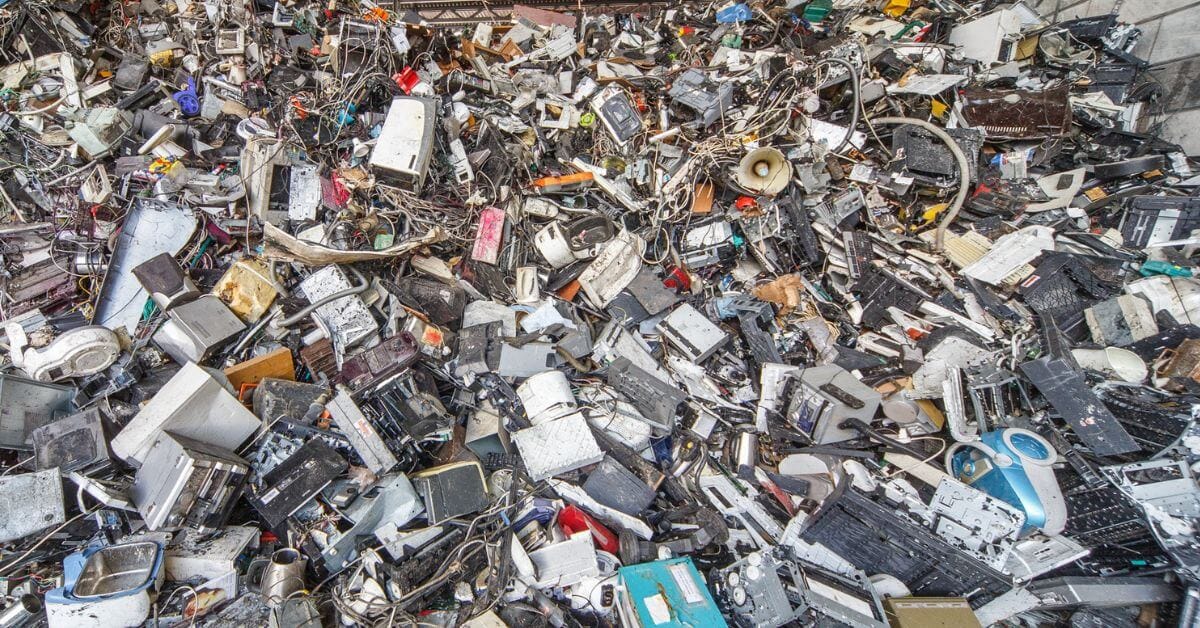
Los residuos electrónicos, o residuos de aparatos eléctricos y electrónicos (RAEE), abarcan una amplia gama de productos que funcionan con electricidad o baterías: desde ordenadores y teléfonos móviles hasta electrodomésticos o dispositivos médicos. Es uno de los flujos de residuos que crecen con mayor rapidez y, por ello, constituye una preocupación mundial crítica. Su correcta gestión y reciclaje son fundamentales: no solo porque contienen materiales peligrosos y pueden tener un impacto negativo en el medio ambiente y la salud pública, sino también porque los residuos electrónicos son una fuente de recursos escasos y valiosos.
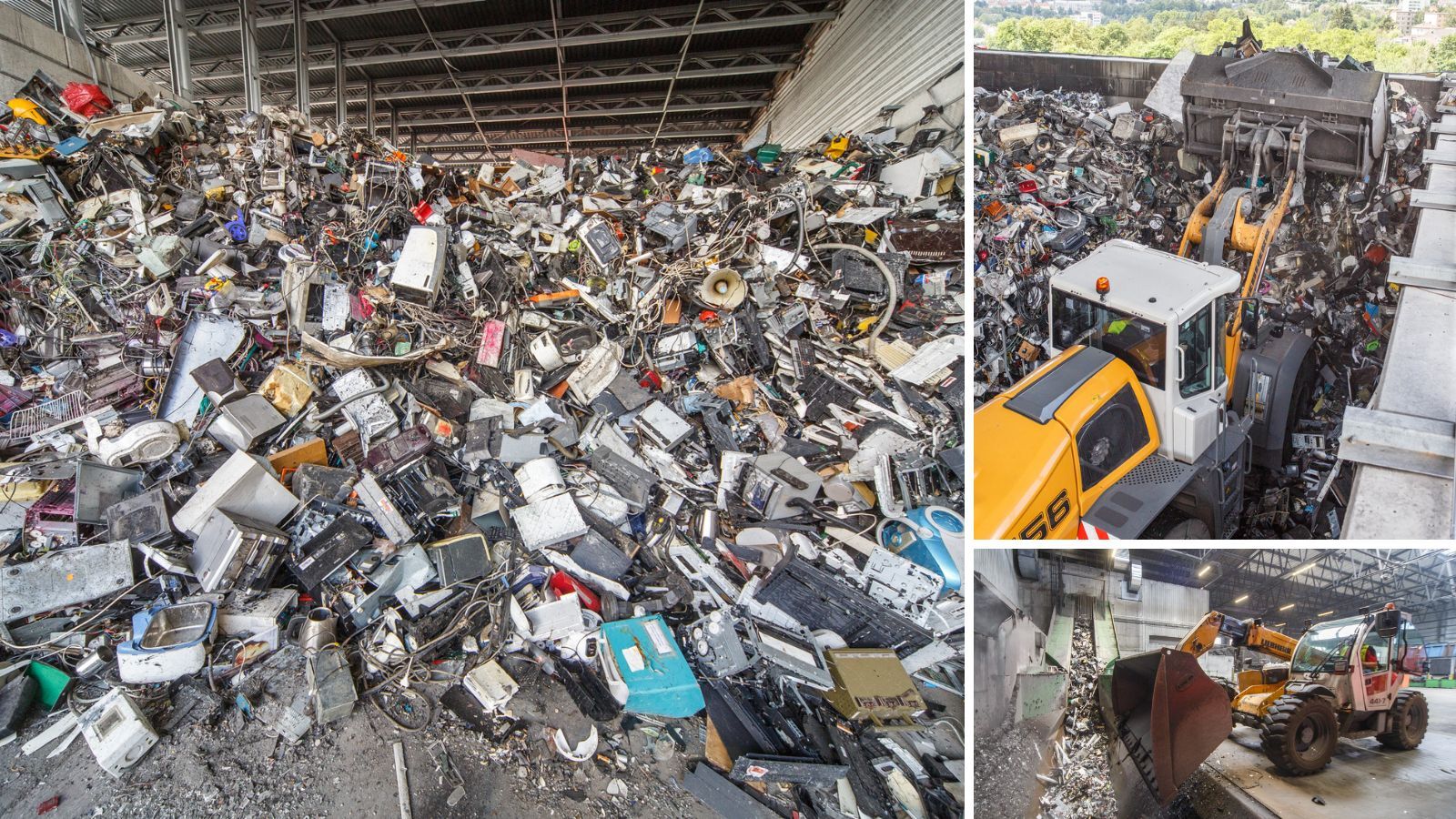
El aumento de los volúmenes de residuos electrónicos está directamente relacionado con el desarrollo económico. Según Publicación del Global E-waste Monitor 2024,en 2022 se generaron a nivel mundial casi 62 Mt de RAEE, y esta cifra aumenta cada año. Se estima que la producción mundial de RAEE alcanzará 82 Mt para 2030.
En 2022, solo el 22,3 % de los residuos electrónicos se recogió y recicló de manera ambientalmente adecuada. En cuanto a la generación de residuos electrónicos per cápita, la Unión Europea ocupa el primer lugar con 17,6 kg, y además presenta las tasas de reciclaje más altas, con un 42,8 %.
Los países de Asia generan casi la mitad de los residuos electrónicos del mundo (30 000 millones de kg). Los países africanos generan las cantidades más bajas de residuos electrónicos, pero, por otro lado, tienen grandes dificultades para reciclarlos; sus tasas de reciclaje son inferiores al 1 %.
Fuente: El Global E-waste Monitor 2024, Pueden haberse producido pequeñas inconsistencias debido al redondeo de los valores durante los cálculos.
Países que generaron la mayor cantidad de RAEE por volumen
- China: 10 129 kt
- EE. UU.: 6 918 kt
- India: 3 230 kt
- Japón: 2 569 kt
- Brasil: 2 143 kt
- Rusia: 1 631 kt
- Indonesia: 1 618 kt
- Alemania: 1 607 kt
- Reino Unido: 1 598 kt
- Francia: 1 362 kt
- México: 1 220 kt
- Italia: 1 063 kt
Países que generaron la mayor cantidad de RAEE per cápita
- Norway: 26 kg
- United Kingdom: 23.9 kg
- Switzerland: 23.4 kg
- Denmark: 22.4 kg
- Australia: 21.7 kg
- The Netherlands: 21.6 kg
- Iceland: 21.4 kg
- USA and France: 21.0 kg
- Japan and Belgium: 20.4 kg
- China and Canada: 20.2 kg
With e-waste, proper management and recycling are crucial. The increase in e-waste generation is almost five times higher than the increase in formal recycling. This is due to technological advances, higher consumption, limited repair options, short product life cycles, increasing digitalization and inadequate e-waste management infrastructure. WEEE contains toxic substances that are released into the environment during informal recycling, which results in a direct negative impact on people’s health, pollution, and even contributes to global warming.
That is why more and more countries are adopting policies on e-waste. In 2023, 81 countries had policies, regulations, or laws in place that regulated e-waste, which covered 72 % of the world’s population. However, the global collection rate averages only 22.3 %, with Europe collecting around 42.8 % WEEE. Not only the number, but the standards of treatments vary greatly around the world.
The economic value of the metals contained in e-waste generated worldwide in 2022 is estimated at 91 billion US dollars (USD). Valuable secondary raw materials are copper (USD 19 billion), gold (USD 15 billion) and iron (USD 16 billion).
E-waste collectors grouped themselves in the WEEE Forum in 2002 – the only international group of producer responsibility organizations (PROs) dedicated to the take-back and treatment of electrical and electronic waste. WEEE Forum is comprised of forty-six not-for-profit members which are mandated by 46,000 producers of electrical and electronic products. In 2021, the PROs from WEEE Forum collected 3.1 million tonnes of e-waste, equivalent to 310 Eiffel Towers. Over the past two decades, they have collectively managed in excess of thirty-five million tonnes.
So how should we correctly dispose of e-waste and what is the recycling process?
1. Collection
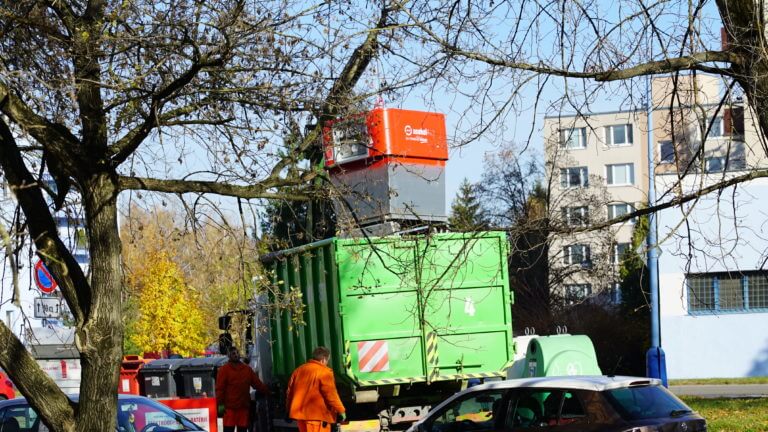
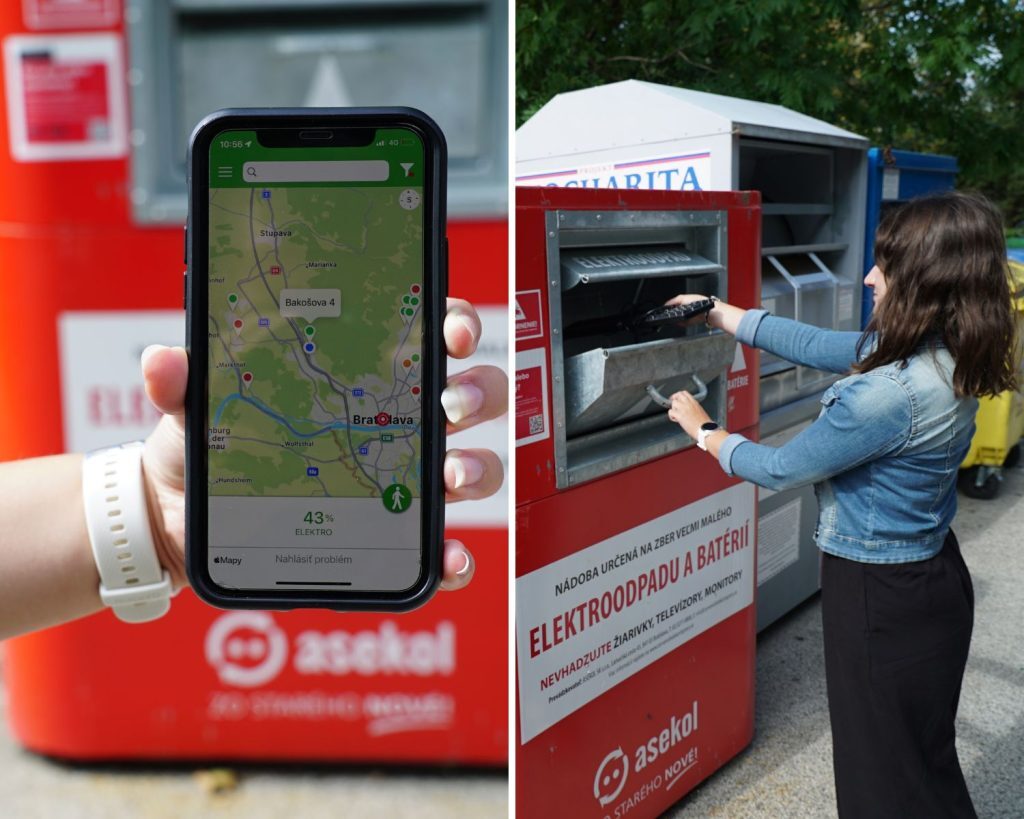
First and foremost, e-waste does not belong to general waste. When disposing of e-waste, you need to bring it to a designated collection place, usually a special recycling bin, a certified collection site, or major electronics retailers. Always check for rules that are valid in your country. Find out more tips for proper e-waste recycling when you move.
Collecting electronic items via recycling bins, take-back programs, collection locations, or on-demand collection services is the first step in the e-waste recycling process. After that, the mixed e-waste is sent to specialized electronics recyclers.
At this step, best practice demands that e-waste is divided by kind, so many collection sites will still have multiple bins and boxes for different things. This is especially critical for e-waste which requires extra handling such as batteries and can cause significant damage if mixed with other rubbish.
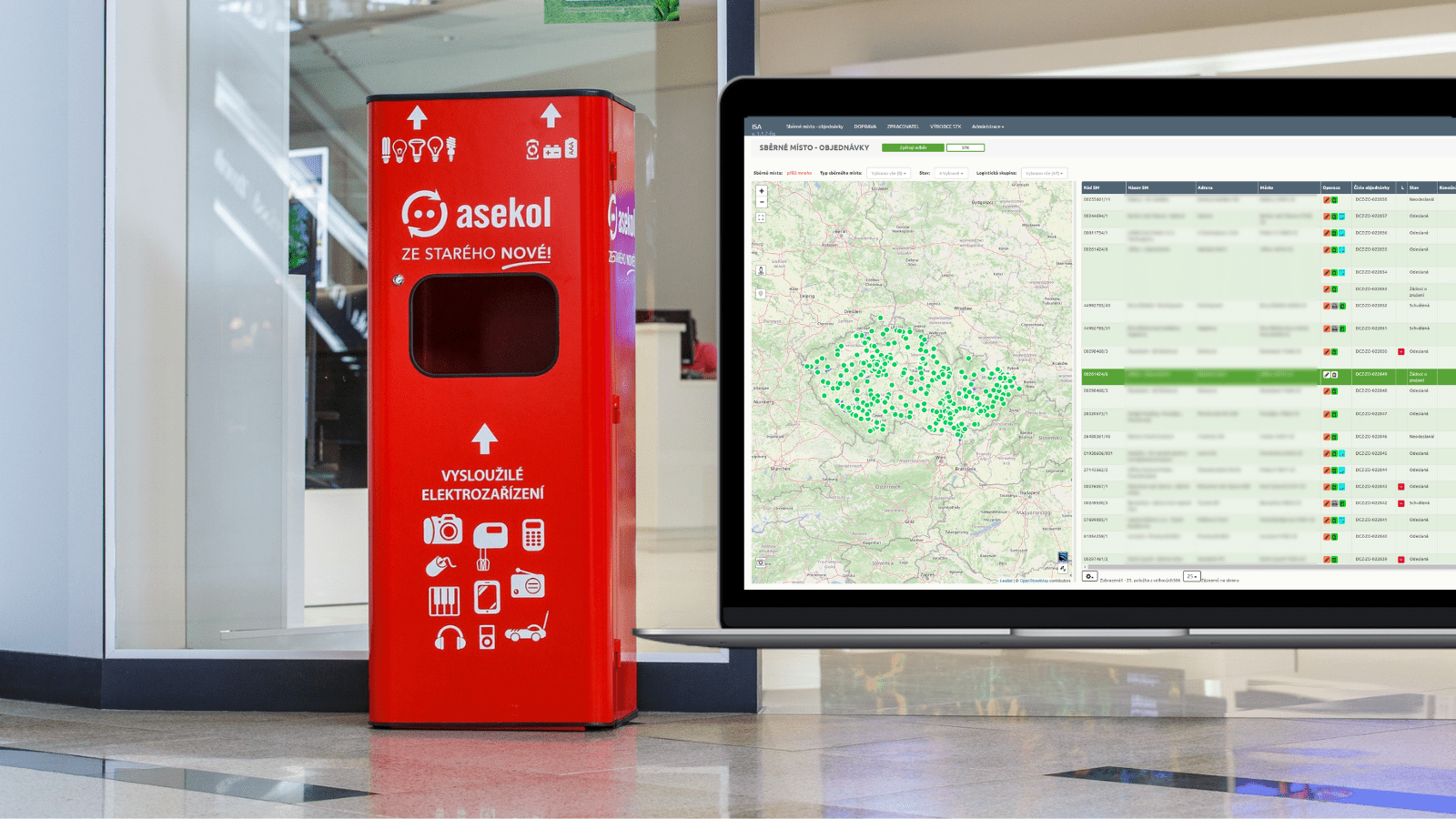
Sensoneo is currently monitoring more than 1300 e-waste containers by company ASEKOL. Thanks to ultrasonic bin sensors, data about the fill-level capacity of the bins can be monitored remotely. Sensoneo’s Citizen App enables citizens to see the nearest available empty bin on the map and discover the shortest route to get there or report any issues by providing feedback about the bin.
2. Sorting, dismantling, and shredding
The first step in processing e-waste involves manual sorting to extract specific items, such as batteries and bulbs, for their own processing. During this stage, certain items may be dismantled by hand to recover valuable materials or components for reuse.
After manual sorting, e-waste is shredded into small pieces to facilitate the precise sorting of materials. This is a critical stage of the process since electronics typically consist of various materials that can be separated mechanically when broken down into centimeter-sized pieces.
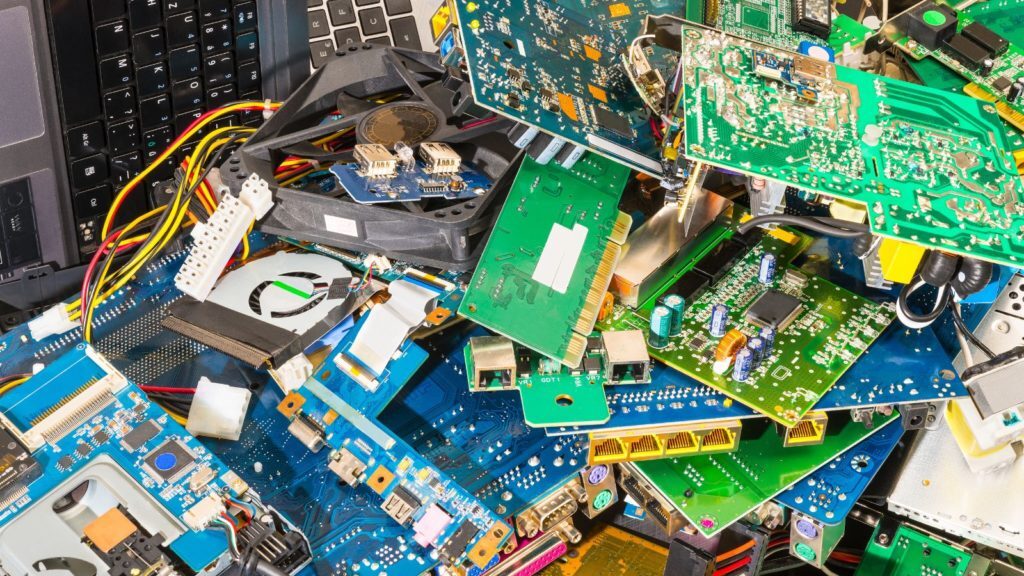
3. Mechanical separation
The mechanical separation of materials involves multiple sequential processes, with magnetic separation and water separation being the primary steps.
Magnetic separation
The e-waste is shredded and subjected to magnetic separation to extract ferrous metals like iron and steel, while non-ferrous metals are separated using eddy currents. These metals are then sent to specialized recycling facilities for smelting. Other materials, such as circuit boards and metal-embedded plastic, are separated during this stage.
Separation by water
After magnetic separation, the remaining solid waste primarily consists of plastic and glass. To further purify the waste and separate different types of plastic, water is used in a subsequent separation step. Obvious contaminants are also hand-sorted during this process.
4. Recovery
Once separated, the materials are readied for reuse and sale. Certain materials, like plastic or steel, are directed to other recycling streams. However, others can be processed onsite and sold directly, along with usable components extracted during earlier stages of the recycling process.
What materials can be extracted from e-waste?
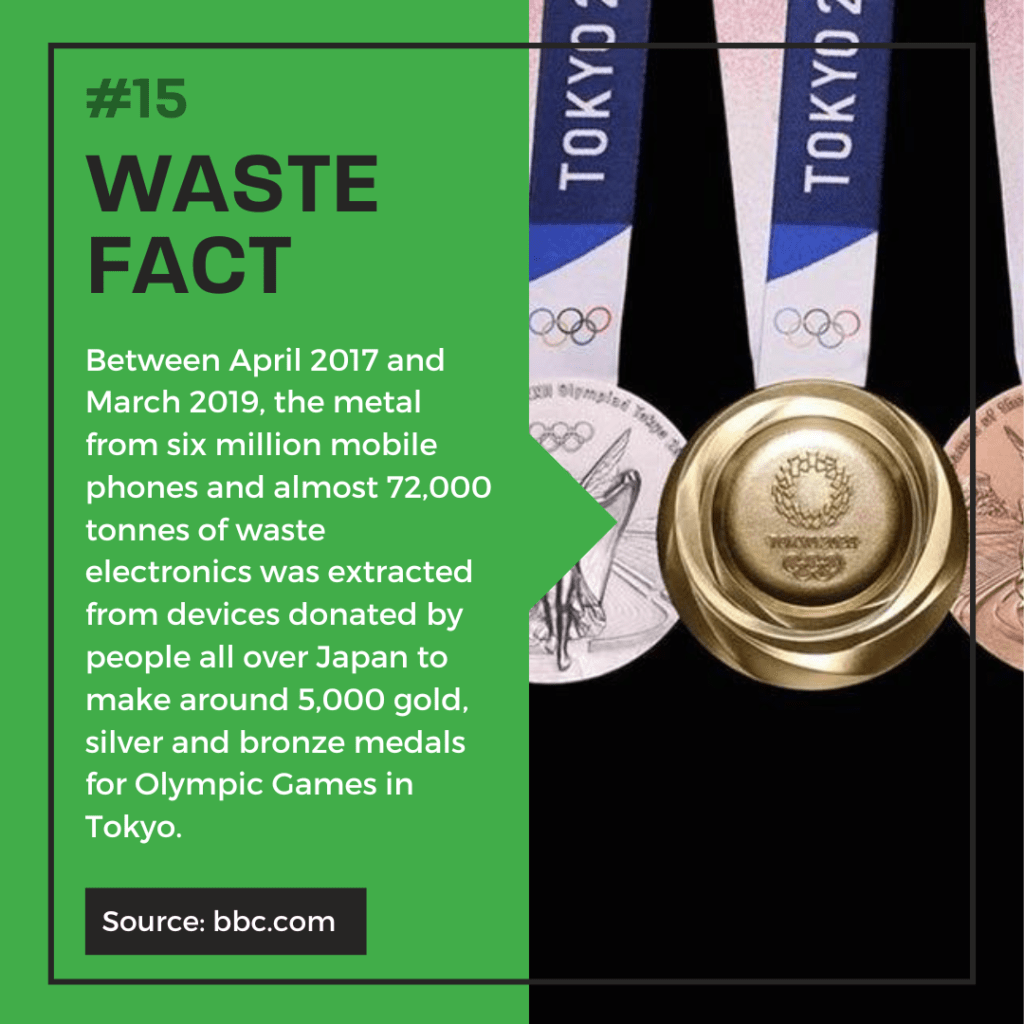
Recycling e-waste is sometimes called urban mining, as it contains some valuable and scarce materials. Recovering certain materials is not only sustainable but also very economical: in the case of gold, copper, and other metals it can be 13 times cheaper than extracting metals from mines.
Materials that can be extracted and re-used include:
- precious metals such as gold, silver, copper, platinum, rhodium, or ruthenium
- critical raw materials such as cobalt, palladium, indium, or antimony
- noncritical metals such as aluminum and iron
- plastics
- glass
- and other materials.
Not all electronic and electrical waste parts can be recycled and reused. For example, the glass screens of Cathode Ray Tubes (CRT) TVs and monitors are highly contaminated by lead. That is why at this moment a large part of this glass is stored indefinitely.
As the whole waste industry, e-waste recycling is also utilizing technologies. That includes for example the use of smart waste solutions for the collection and transport of e-waste like Sensoneo’s take-back system, using robots for dismantling electronics instead of shredding, or utilizing artificial intelligence in identifying e-waste.
References:
conserve-energy-future.com, rts.com, iberdrola.com, roadrunnerwm.com, ewastemonitor.info, europa.eu, weee-forum.org, Global E-Waste Monitor 2024
Latest waste library articles

La Evolución del Cumplimiento de la EPR y los Sistemas de Software PRO
EPR Compliance, Extended Producer Responsibility (EPR)6 estadísticas sorprendentes sobre los sistemas de depósito y devolución (DRS) que necesitas conocer
Deposit Return SystemComprender los residuos industriales: tipos y fuentes
Factory Waste Management, Industrial Waste
Cómo funciona una máquina de devolución de depósitos? Preguntas resueltas
La Evolución del Cumplimiento de la EPR y los Sistemas de Software PRO
EPR Compliance, Extended Producer Responsibility (EPR)6 estadísticas sorprendentes sobre los sistemas de depósito y devolución (DRS) que necesitas conocer
Deposit Return SystemComprender los residuos industriales: tipos y fuentes
Factory Waste Management, Industrial WasteCómo funciona una máquina de devolución de depósitos? Preguntas resueltas
Boletín Smart Waste
¡Recibe actualizaciones mensuales de nuestra empresa y del sector de los residuos!